
Short answer: Aluminium is well suited to slim, durable folding-door frames, but alloy alone does not determine performance. Compare profile depth, thermal-break design, drainage, corner construction, finish, seals, hardware and the size range supported by tests or engineering.
Key decisions at a glance
- Use aluminium/aluminum spelling variants naturally, not as separate pages.
- Check frame and glass performance together.
- Specify finish system and colour reference for the exposure.
- Confirm maximum panel size and weight for the exact hardware.
What an aluminium bifold door means in a project brief
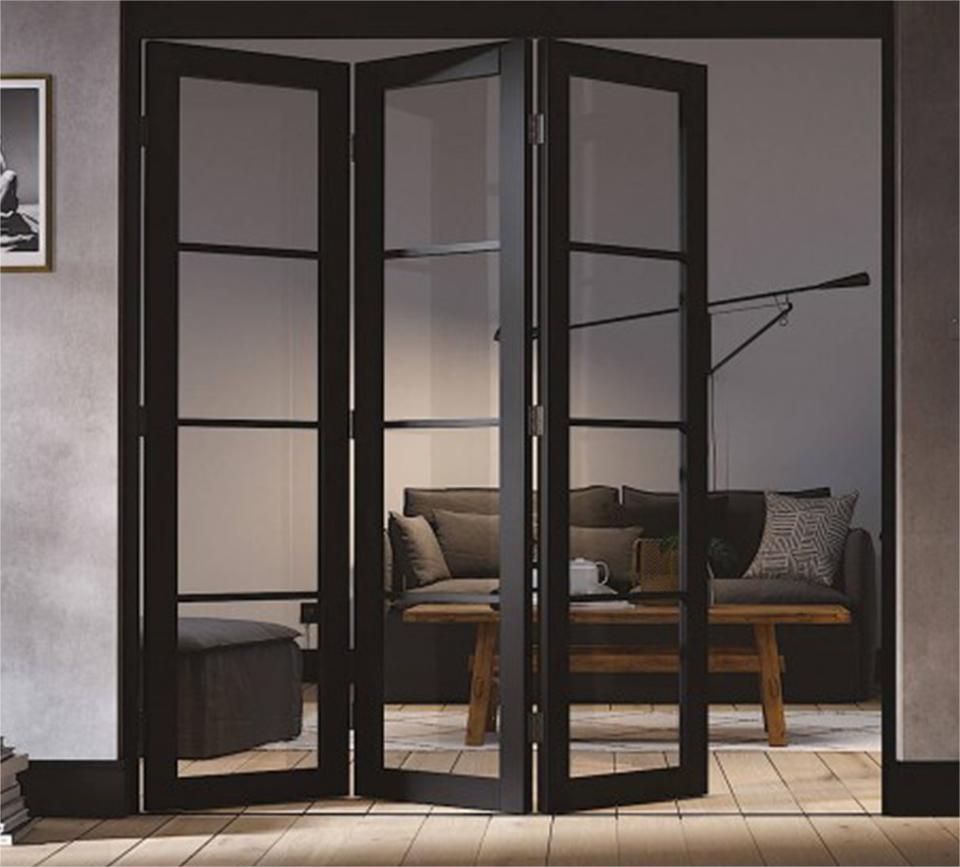
Aluminium bifold door and aluminum bifold door are the same product family with regional spelling differences. Extruded profiles create frames, glazing pockets, drainage chambers and hardware interfaces. Some systems use a thermal barrier between interior and exterior aluminium; others are non-thermal and suit different climates or project goals.
Search phrases are not specifications. Similar terms can describe different panel counts, opening directions, sill conditions or glazing builds. Use the keyword to find a product family, then convert it into measurable requirements before comparing quotations.
Option comparison
| Feature | Non-thermal frame | Thermal-break frame | Procurement question |
|---|---|---|---|
| Heat flow | Continuous aluminium path | Reduced conductive bridge | What is the whole-product value? |
| Climate fit | Mild or performance-light applications | Conditioned spaces and demanding climates | What target applies locally? |
| Cost/complexity | Generally simpler | Additional materials and assembly control | Is the offered series fully documented? |
| Finish | Powder coat/anodise options | Same options with barrier coordination | What class, colour and warranty apply? |
Look inside the profile, not only at sightline width
Profile geometry governs stiffness, glass retention, drainage and connection of hinges or carriers. A very slim stile may be attractive but must still control deflection and hold the final IGU safely at the required panel dimensions.
Ask for a system cross-section and maximum-size chart. Confirm whether quoted dimensions are frame, sash or clear opening and whether limits change with wind pressure or heavier glass.
Specify the finish as a system
Colour name alone is incomplete. State the colour reference, gloss level, powder-coating or anodising system, visible sample, exposure category and acceptable batch variation. Hardware and seal colours should be coordinated as separate components.
Coastal and industrial environments may need more demanding preparation, coating and maintenance. The finish supplier's current recommendations should inform the specification rather than a generic claim of corrosion resistance.
Require controlled fabrication and adjustment
Long folding sets accumulate small tolerances across many leaves. Squareness, corner assembly, glazing blocks, hinge positions and carrier adjustment influence the final operation. Factory quality checks should be followed by documented site adjustment.
Protect tracks and finishes during transport and construction. Cleaning cement, grinding dust or sealant from a finished frame can damage coatings and obstruct drainage.
Specification checklist
| Item | What to define | Evidence to request |
|---|---|---|
| Series | Profile name/depth and thermal-break status | System data sheet |
| Limits | Maximum width, height, weight and wind criteria | Size chart/report |
| Finish | Process, colour, gloss and exposure | Sample and warranty |
| Corners | Joining, sealing and drainage continuity | Fabrication manual |
| Glass | Retained thickness range and setting | Glazing detail |
| Hardware | Material, capacity, adjustment and spares | Hardware schedule |
For an international order, identify the destination country, site exposure, building type and authority having jurisdiction at the start. A report for one size, glass build or hardware set may not represent another configuration. Ask the supplier to identify exactly which tested or calculated configuration supports the offered unit.
Energy, safety and regulatory evidence
Energy labels and declarations are regional. NFRC explains whole-product U-factor, solar heat gain coefficient, visible transmittance and air leakage for North American comparison. The EU Construction Products Regulation provides a common framework for declaring construction-product performance. UK Approved Documents and Australian YourHome guidance illustrate how local rules and climate design can change the right answer. These sources are starting points; the project designer or local authority determines what applies.
- NFRC energy-performance ratings
- European Commission: Construction Products Regulation
- Australian Government YourHome glazing guide
- U.S. 16 CFR Part 1201 architectural safety glazing
Questions to send with an RFQ
- What are the finished structural opening and permitted tolerances?
- Which panel or sash arrangement, handing and opening direction is required?
- What glass make-up, safety treatment, spacer and coating are proposed?
- What frame finish, colour, drainage path, seals and hardware set are included?
- Which performance reports apply to this exact size and configuration?
- How will the unit be packed, protected, installed, adjusted and maintained?
- Which exclusions could change the landed or installed cost?
Record the decision before manufacture
Close the selection process with one controlled schedule for an aluminium bifold door. It should reference the approved drawing revision, opening survey, finish sample, glass specification, hardware set, performance documents, packing method and installation responsibilities. Record every accepted deviation and identify who approved it. This compact decision record helps the designer, buyer, factory, logistics team and installer work from the same assumptions; it also makes later maintenance or replacement far easier than relying on emails, search terms or an undated catalogue page.
Frequently asked questions
Is aluminium better than other bifold materials?
It offers strength, slim profiles and durable finishes, but the best material depends on thermal target, exposure, maintenance, design and budget.
Do aluminium bifolds need a thermal break?
Not in every project. Conditioned buildings and temperature extremes benefit most; compare whole-product performance against the local target.
Can aluminium bifolds be custom sized?
Usually within system, glass and hardware limits. Large or unusual panels may require engineering and different components.
Is powder coating maintenance-free?
No finish is maintenance-free. Cleaning frequency and inspection should match exposure and the coating supplier's instructions.
Next step
Review Forge's aluminium bifold door range, then send the opening size, drawings, destination and performance requirements. Forge can discuss configuration and manufacturing options, but final suitability and code compliance must be confirmed for the specific project.
Technical note: reviewed in August 2026. Regulations, product options and test scopes can change; verify current documents before procurement.


