
Short answer: Aluminium sliding doors combine rigid extruded frames with rollers, interlocks and glazed or solid panels. A reliable selection matches profile stiffness, thermal design, glass weight, carrier capacity, sill drainage, locks and finish to the opening and destination climate.
Key decisions at a glance
- Aluminium and aluminum are spelling variants, not different products.
- Check panel size and weight together with roller capacity.
- Compare whole-product thermal and air performance.
- Specify colour, coating system and exposure.
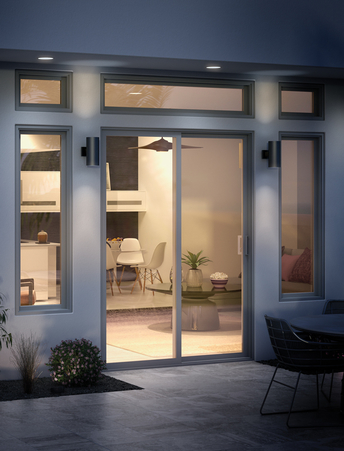
What an Aluminium Sliding Door means in a project brief
Aluminium sliding door, sliding Aluminium Door and aluminum sliding glass door describe the same broad material-and-operation family. Product series can differ substantially in rail count, frame depth, thermal break, interlock geometry, glass thickness and hardware. The series name and drawings matter more than word order.
Search phrases are not specifications. Similar terms can describe different panel counts, opening directions, sill conditions or glazing builds. Use the keyword to find a product family, then convert it into measurable requirements before comparing quotations.
Option comparison
| Feature | Standard aluminium slider | Thermal-break slider | Project check |
|---|---|---|---|
| Frame path | Continuous aluminium | Insulating barrier separates faces | Whole-product U-factor |
| Panel scale | System-dependent | System-dependent and often heavier | Size/weight chart |
| Drainage | Track chambers and outlets | Track chambers with thermal coordination | Sill section and water test |
| Finish | Powder coat or anodise | Same, with barrier compatibility | Exposure class and warranty |
Match the profile to panel scale
Large glass areas place bending, torsion and roller loads on the sash. Ask for permissible width, height, area, weight and aspect ratio at the project wind pressure. A single maximum dimension without the other limits is incomplete.
Interlocks must engage sufficiently while allowing construction tolerances and movement. Slimmer is not automatically better if stiffness, lock engagement or glass support is compromised.
Read thermal performance as a complete door
Frame conductivity, glass, spacer, seals, panel area and air leakage all affect comfort. NFRC explains why U-factor, SHGC, visible transmittance and air leakage describe different parts of energy performance.
Select values for climate and orientation. A thermally broken frame can reduce conduction, but only a rating or calculation for the complete proposed configuration supports the project comparison.
Specify rollers, locks and finishes for service life
Rollers should be sized for final glass mass and remain adjustable after installation. Locks need full engagement at the final frame position; stops should prevent handles or panels striking adjacent construction.
Define powder coat or anodise by a recognised finish specification, colour sample and exposure. Include cleaning intervals, especially in coastal or industrial environments.
Specification checklist
| Item | What to define | Evidence to request |
|---|---|---|
| Profile | Series, depth and thermal-break status | Cross-section/data sheet |
| Panel limits | Width, height, area, weight and aspect ratio | Current limit chart |
| Glass | Build, safety treatment and setting | Glass schedule |
| Rollers | Capacity, material, adjustment and replacement | Hardware data |
| Locks | Engagement, cylinders and security points | Hardware schedule |
| Finish | Process, colour, gloss and exposure | Sample and warranty |
For an international order, identify the destination country, site exposure, building type and authority having jurisdiction at the start. A report for one size, glass build or hardware set may not represent another configuration. Ask the supplier to identify exactly which tested or calculated configuration supports the offered unit.
Energy, safety and regulatory evidence
Energy labels and declarations are regional. NFRC explains whole-product U-factor, solar heat gain coefficient, visible transmittance and air leakage for North American comparison. The EU Construction Products Regulation provides a common framework for declaring construction-product performance. UK Approved Documents and Australian YourHome guidance illustrate how local rules and climate design can change the right answer. These sources are starting points; the project designer or local authority determines what applies.
- NFRC energy-performance ratings
- European Commission: Construction Products Regulation
- Australian Government YourHome glazing guide
- U.S. 16 CFR Part 1201 architectural safety glazing
Questions to send with an RFQ
- What are the finished structural opening and permitted tolerances?
- Which panel or sash arrangement, handing and opening direction is required?
- What glass make-up, safety treatment, spacer and coating are proposed?
- What frame finish, colour, drainage path, seals and hardware set are included?
- Which performance reports apply to this exact size and configuration?
- How will the unit be packed, protected, installed, adjusted and maintained?
- Which exclusions could change the landed or installed cost?
Record the decision before manufacture
Close the selection process with one controlled schedule for an aluminium sliding door. It should reference the approved drawing revision, opening survey, finish sample, glass specification, hardware set, performance documents, packing method and installation responsibilities. Record every accepted deviation and identify who approved it. This compact decision record helps the designer, buyer, factory, logistics team and installer work from the same assumptions; it also makes later maintenance or replacement far easier than relying on emails, search terms or an undated catalogue page.
Frequently asked questions
Are aluminium sliding doors energy efficient?
They can be when glass, frame, seals and installation meet the target. Compare whole-product values rather than material claims.
How large can an aluminium sliding panel be?
Limits depend on profile stiffness, glass weight, rollers, wind pressure and aspect ratio. Use the exact system chart or engineering.
Is a thermal break always necessary?
It is most valuable in conditioned spaces and temperature extremes. The project energy target should decide.
Which finish is best near the coast?
The coating or anodising supplier should recommend preparation, class and maintenance for the specific exposure; colour alone is not enough.
Next step
Review Forge's aluminium sliding door products, then send the opening size, drawings, destination and performance requirements. Forge can discuss configuration and manufacturing options, but final suitability and code compliance must be confirmed for the specific project.
Technical note: reviewed in August 2026. Regulations, product options and test scopes can change; verify current documents before procurement.


