


Send Message
Privacy statement: Your privacy is very important to Us. Our company promises not to disclose your personal information to any external company with out your explicit permission.

EN
Throughout the evolution of architectural windows, arched windows remain a timeless design that balances structural rationality and aesthetic value. From traditional stone and timber arches to modern aluminium arched windows, material innovation has preserved the natural advantages of curved glazing in daylighting and facade appeal, while solving the long-standing pain points of traditional materials under Australia’s extreme climate — premature ageing, deformation and high maintenance costs. This guide breaks down the technical logic and real-world applications of arched aluminium windows across material, manufacturing and performance dimensions.
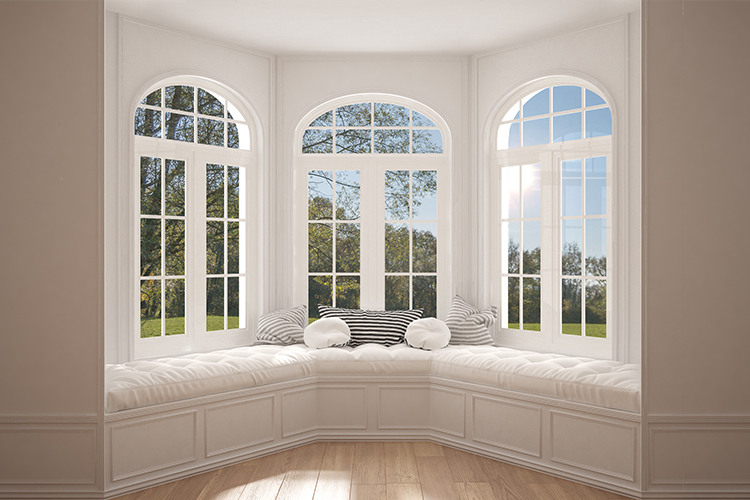
Arched windows are not a single uniform design. Based on the curvature and shape of the top arch, they fall into three main categories, each suited to different architectural requirements and structural properties:
Semi-circular arch Featuring a standard 180° rounded top, this is the most classic arched form. It distributes structural stress evenly across the curve, delivering high structural stability and making it ideal for large openings. It is commonly used as transom windows above entry doors or feature facade windows in living rooms, and complements traditional, heritage, Mediterranean and many other architectural styles.
Segmental low-rise arch With a gentle, shallow curvature and lower arch rise, this profile creates a more restrained and extended visual effect. It has less vertical emphasis and does not excessively occupy wall height, making it the mainstream choice for modern homes and townhouses. It adds layered detail to the facade without disrupting a minimalist design language.
Gothic pointed arch Defined by a symmetrical sharp peak at the top, this style creates strong vertical elongation. Originating from classical church architecture, it is widely used in heritage home restoration. Aluminium’s precision forming capability reproduces the crisp lines of pointed arches while eliminating the splitting and cracking risks common to timber.
In residential applications, most arched windows follow a “fixed upper arch + operable lower sashes” configuration: the curved upper section uses fixed glazing to preserve facade integrity and maximise light intake, while the lower section can be fitted with casement, sliding or awning sashes for controlled ventilation, balancing aesthetics and practicality.

The performance ceiling of an arched Aluminium Window is determined primarily by bending precision and joint sealing quality — the two key markers that separate high-quality products from inferior alternatives:
CNC cold bending of profiles Premium arched windows are manufactured using CNC cold bending technology, which progressively bends a full-length aluminium profile at room temperature. This process does not damage the internal metallurgical structure of the aluminium or harm the surface finish. The resulting curve is smooth and uniform, with no noticeable thinning of the profile wall and no wavy distortion of the frame. Lower-quality products often use simple press bending or segmented assembly, which can result in uneven curves and localised stress concentration. Over time, this may lead to seal failure and frame deformation at the bend points.
Corner assembly and sealing technology The joints between the curved section and the straight vertical frames are the weakest points for water and wind resistance. Qualified products adopt a dual structure of mechanical corner crimping + continuous weather seals: profiles are first precisely fixed with corner cleats, then the joint is filled with weatherproof sealant and fitted with continuous gaskets to eliminate water infiltration and air leakage.
Consistent surface finish Arched windows require an intact surface coating after bending. Both powder coating and anodising processes include pre-treatment of the base material before bending, ensuring the coating does not crack or delaminate after forming, and that colour and texture are perfectly matched across curved and flat sections.
Australia’s climate — with intense year-round UV radiation, corrosive coastal salt spray, large diurnal temperature swings and frequent cyclones in the north — places extreme demands on window materials. The comprehensive performance of aluminium arched windows is specifically aligned with these environmental challenges:
UV ageing resistance Parts of Australia have among the highest UV exposure levels in the world. Prolonged sun
exposure causes timber to crack and fade, and PVC profiles to yellow and turn brittle. Aluminium itself does not
degrade under UV radiation; when paired with powder-coated or anodised finishes, it retains stable colour for over
20 years without chalking or peeling.
Salt spray corrosion resistance For homes within 10 kilometres of the coastline, salt spray continuously attacks metal components. Standard steel arched windows rust easily, and timber arches decay in humid conditions. Aluminium naturally forms a protective oxide layer; when upgraded with marine-grade surface treatment and 316 stainless steel hardware, it resists salt corrosion long-term, with a service life 2–3 times that of conventional materials.
Thermal dimensional stability Inland and alpine regions of Australia experience large day-night temperature differences. Timber and PVC expand and contract with changes in temperature and humidity, leading to sash jamming and seal failure. Aluminium has a more stable coefficient of thermal expansion, and when combined with thermal break design, it exhibits minimal dimensional change, ensuring smooth operation and tight sealing year after year.
Wind load and impact resistance Northern cyclone zones and multi-storey homes demand high wind resistance from windows. Aluminium offers high strength and rigidity; reinforced arched windows meet the high wind load ratings of Australian Standard AS2047, and when paired with laminated glass, they withstand wind-borne debris during storms without structural deformation or glass breakage.
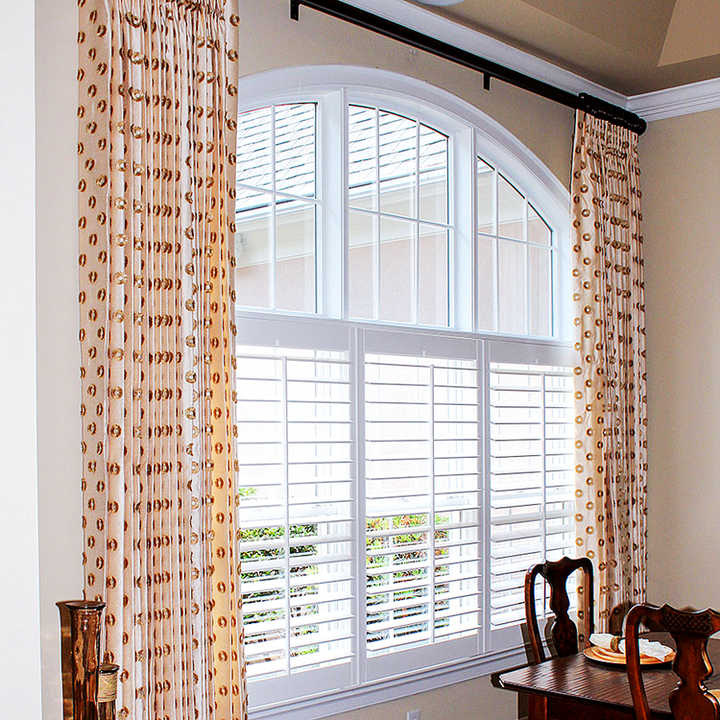
Arched aluminium windows can be upgraded with modular configurations to suit different climates and living requirements, each with a clear functional purpose:
Thermal break upgrade A polyamide thermal strip is inserted into the aluminium profile cavity to interrupt the heat conduction path of the metal. This design reduces the window’s U-value (thermal transmittance), minimises summer heat gain and winter heat loss, and helps homes meet 7-star NatHERS energy ratings. It is a recommended performance upgrade for all climate zones.
Glazing selection logic
Hot, high-sunlight regions: Choose Low-E low-emissivity double glazing to reflect solar infrared radiation and reduce indoor heat gain.
Roadside and cyclone-prone areas: Choose laminated glass. The PVB interlayer absorbs impact, reduces external noise, and holds glass fragments in place if broken.
Privacy zones: Choose frosted or patterned glass to maintain daylight intake while ensuring privacy.
Safety function upgrades Multi-storey homes can be fitted with key-operated window restrictors to limit opening width and reduce fall risks for children. Arched windows near entry points can be paired with multi-point locking systems for improved burglary resistance.
Contact me today.
Author:
Ms. Eva Li
E-mail:

November 08, 2026

November 08, 2026
Email to this supplier
Author:
Ms. Eva Li
E-mail:
November 08, 2026
November 08, 2026
Privacy statement: Your privacy is very important to Us. Our company promises not to disclose your personal information to any external company with out your explicit permission.
Fill in more information so that we can get in touch with you faster
Privacy statement: Your privacy is very important to Us. Our company promises not to disclose your personal information to any external company with out your explicit permission.