
Short answer: Buy a sliding door by issuing a consistent RFQ with dimensions, panel layout, glass, finish, performance, destination and scope. Compare suppliers on evidence, drawings, quality control, logistics and after-sales support as well as price.
Key decisions at a glance
- Use 'near me' to find service, not to skip technical checks.
- Ask every supplier to quote the same configuration.
- Approve drawings and samples before production.
- Define inspection, packing, delivery and warranty responsibilities.
What buying a sliding door means in a project brief
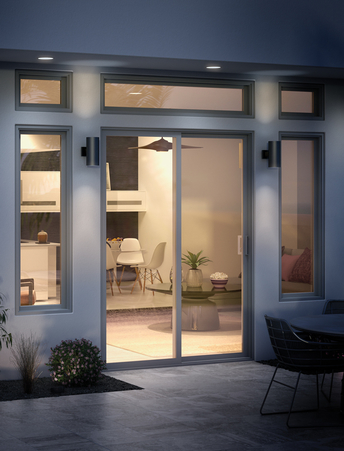
Searches for sliding doors for sale or aluminium sliding doors near me combine product and supplier intent. A nearby showroom may simplify surveys and service; an international manufacturer may offer broader customisation or factory pricing. The correct route depends on project risk, scale and local installation capability.
Search phrases are not specifications. Similar terms can describe different panel counts, opening directions, sill conditions or glazing builds. Use the keyword to find a product family, then convert it into measurable requirements before comparing quotations.
Option comparison
| Purchase route | Strength | Question | Risk control |
|---|---|---|---|
| Local dealer | Survey and service access | Who manufactures and warrants? | Written scope/responsibility |
| Direct manufacturer | Customisation and technical access | Who installs locally? | Approved installer and inspection |
| Retail stock | Fast availability | Does size/performance fit? | No unverified modification |
| Project supplier | Coordinated package | What evidence and samples? | Submittal programme |
Create an RFQ that produces comparable answers
Provide opening surveys or drawings, active/fixed panel diagram, sill and floor levels, glass target, finish, handles, security, energy and weather criteria, quantity, destination and programme. Ask bidders to state deviations rather than silently substitute.
Request a price breakdown for product, testing or engineering, crates, freight, duties, unloading, installation and commissioning. State the required trade term and currency.
Evaluate evidence and production controls
Review system data, size limits and reports before price ranking. Ask how the supplier controls extrusion, finish, glass, corner assembly, hardware installation, drainage and final operation.
Approve shop drawings, colour and hardware samples. For a large order, define factory inspection or sample-unit checks and a process for nonconformities.
Plan local installation and after-sales support
A factory-made door still depends on a square supported opening, correct fixings, perimeter seals, drainage and adjustment. Identify who surveys, installs, water-tests and signs off the work.
Warranty language should identify covered parts, exclusions, maintenance, labour, freight and response process. Keep a spare-parts list for rollers, locks, seals and handles.
Specification checklist
| Item | What to define | Evidence to request |
|---|---|---|
| RFQ | Dimensions, panels, glass, finish and criteria | Issued brief |
| Supplier | Factory role, references and quality process | Profile/evidence |
| Submittals | Drawings, samples, reports and certificates | Approved register |
| Price | Currency, trade term and inclusions | Itemised offer |
| Delivery | Packing, route, unloading and storage | Logistics plan |
| Support | Install, warranty, spares and claims | Responsibility matrix |
For an international order, identify the destination country, site exposure, building type and authority having jurisdiction at the start. A report for one size, glass build or hardware set may not represent another configuration. Ask the supplier to identify exactly which tested or calculated configuration supports the offered unit.
Energy, safety and regulatory evidence
Energy labels and declarations are regional. NFRC explains whole-product U-factor, solar heat gain coefficient, visible transmittance and air leakage for North American comparison. The EU Construction Products Regulation provides a common framework for declaring construction-product performance. UK Approved Documents and Australian YourHome guidance illustrate how local rules and climate design can change the right answer. These sources are starting points; the project designer or local authority determines what applies.
- NFRC energy-performance ratings
- European Commission: Construction Products Regulation
- Australian Government YourHome glazing guide
- U.S. 16 CFR Part 1201 architectural safety glazing
Questions to send with an RFQ
- What are the finished structural opening and permitted tolerances?
- Which panel or sash arrangement, handing and opening direction is required?
- What glass make-up, safety treatment, spacer and coating are proposed?
- What frame finish, colour, drainage path, seals and hardware set are included?
- Which performance reports apply to this exact size and configuration?
- How will the unit be packed, protected, installed, adjusted and maintained?
- Which exclusions could change the landed or installed cost?
Record the decision before manufacture
Close the selection process with one controlled schedule for buying a sliding door. It should reference the approved drawing revision, opening survey, finish sample, glass specification, hardware set, performance documents, packing method and installation responsibilities. Record every accepted deviation and identify who approved it. This compact decision record helps the designer, buyer, factory, logistics team and installer work from the same assumptions; it also makes later maintenance or replacement far easier than relying on emails, search terms or an undated catalogue page.
Frequently asked questions
Should I buy from a supplier near me?
Local service can be valuable, but still verify the exact system, evidence, price scope and warranty. Location alone does not prove suitability.
What makes two sliding-door prices comparable?
They need the same dimensions, panel layout, glass, frame, finish, hardware, performance, delivery term and installation scope.
Should I pay before approving drawings?
Commercial terms vary, but production should be based on approved dimensions, configuration, finish, glass, hardware and change control.
What spare parts should I request?
Identify rollers, locks, handles, seals, guides and any proprietary tools, with part numbers and replacement instructions.
Next step
Review Forge's sliding doors for project enquiries, then send the opening size, drawings, destination and performance requirements. Forge can discuss configuration and manufacturing options, but final suitability and code compliance must be confirmed for the specific project.
Technical note: reviewed in August 2026. Regulations, product options and test scopes can change; verify current documents before procurement.


