
Security for sliding glass doors should be reviewed across the complete opening: frame, locking hardware, panel retention, glazing and installation. Use compatible components and relevant product evidence, then maintain normal closing and locking. Monitoring sensors can report status, but they do not replace the physical function of the door assembly.
For an existing home, begin by identifying the product and its condition. A new lock or an added device should fit the actual system and preserve required access functions rather than being selected only because it looks substantial.
Review sequence: assess the existing assembly, confirm compatible protection and distinguish actual locking from monitoring information.
Start security for sliding glass doors with the existing condition
Identify the manufacturer, model and operating arrangement. Check whether the door closes normally and whether the intended lock engages as designed. Record any damage, loose components or changed operation for a qualified service assessment.
Secured by Design provides crime-prevention guidance for sliding patio doors, including attention to suitable locking and retention features. Use that guidance as a reason to review the complete product, not as an instruction to improvise an alteration.
Retain the manufacturer-specified guides, stops and retention components. A security review should not remove parts needed for normal operation or rely on an unverified frame condition.
If the door cannot close or lock correctly, have the cause assessed rather than treating an added accessory as a substitute for repair.
Match locks and accessories to the complete assembly
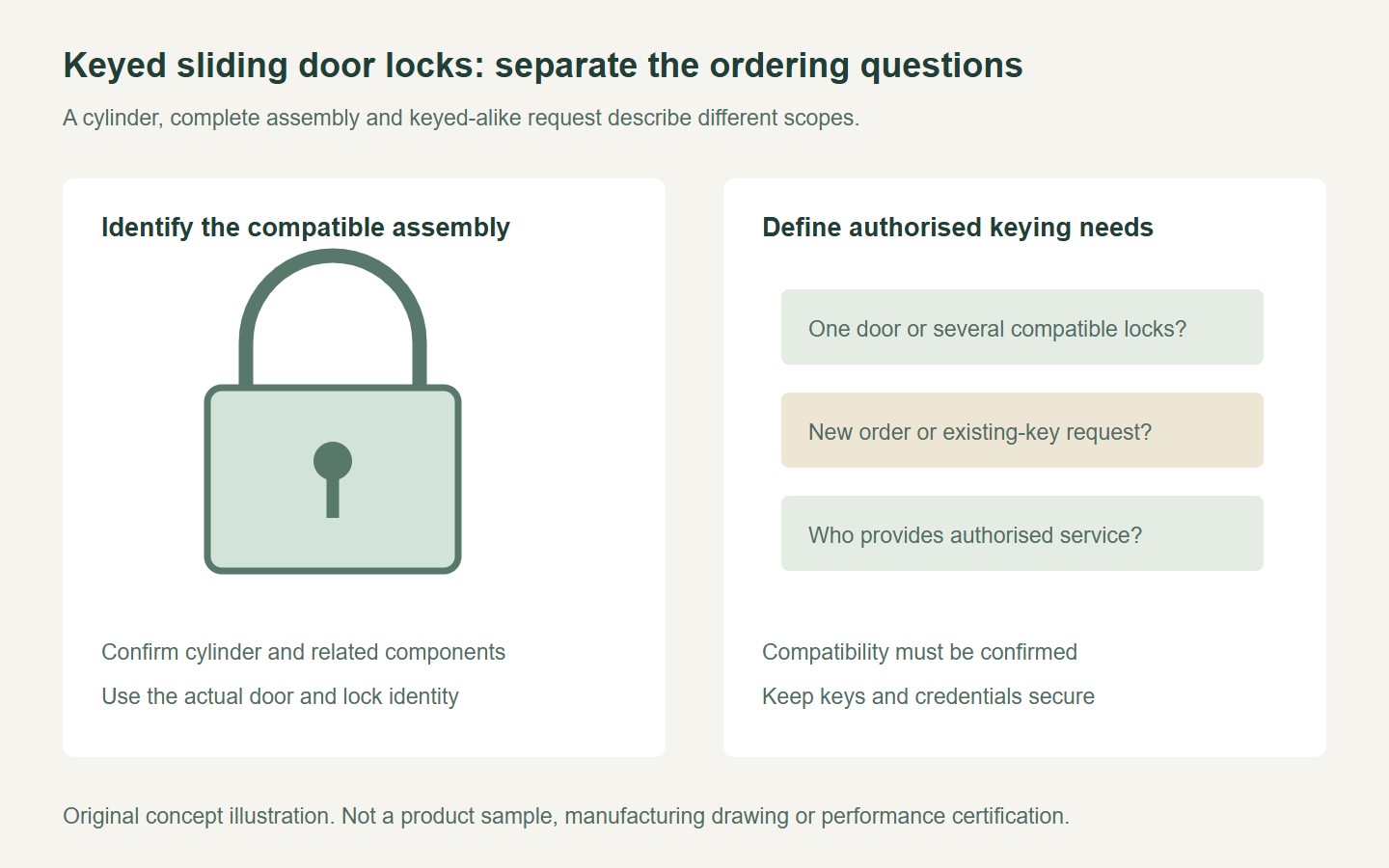
Ask the supplier to identify compatible locks, receivers and any approved supplementary hardware for the actual door. Confirm dimensions, handing and permitted preparation through the selected product information.
Andersen distinguishes handle hardware from related locking components in its gliding-door service guidance. A handle replacement is therefore not automatically a complete security upgrade.
| Physical item | Review question |
|---|---|
| Frame and installation | Is the assembly identified and in suitable condition? |
| Lock and receiver | Are the components compatible and operating correctly? |
| Retention and guidance | Are required parts installed as specified? |
| Glazing | What construction and relevant evidence are provided? |
| Added device | Is it approved for this system and required use? |
Have any modification assessed before drilling or attaching hardware to a frame or glazed leaf. Similar appearance or matching screw spacing does not establish compatibility.
Distinguish glazing safety from security performance
Ask for the actual glass build and the evidence relevant to the requirement. A safety-glazing description, a decorative film and a security-rated assembly are not interchangeable claims.
The U.S. Consumer Product Safety Commission addresses architectural glazing safety requirements. Meeting an applicable safety-glazing requirement should not be presented as proof of every security outcome.
If enhanced security glazing or a protective treatment is proposed, have its compatibility with the frame and installation confirmed. A sheet, film or material name alone does not establish the performance of the complete doorway.
Avoid universal promises that a glass door is impossible to damage or enter through. Compare documented products and conditions rather than unsupported absolute language.
Treat monitoring as information about the door
A sensor may indicate an open or closed condition, a lock state or another specific status depending on the product and configuration. Confirm what is actually being monitored.
Andersen describes VeriLock reporting of open/closed and locked/unlocked states when properly configured and maintained. This is a named system capability, not a guarantee that every door sensor detects the lock or works with every service provider.
Keep the monitoring system, notifications and maintenance responsibilities clear. A status message does not physically engage the lock, repair a frame or establish a tested security rating.
Ask about the actual integration, power or battery requirements and service route before choosing an accessory. Use the manufacturer's supported setup and normal operation rather than bypassing security controls.
Preserve required access and maintain the arrangement
Confirm that any selected lock or supplementary device preserves the opening's required access and exit functions. Have the relevant project requirements reviewed before changing the hardware.
At handover or after service, obtain a demonstration of normal closing and authorised locking. Keep the installed references and care instructions so later problems can be assessed against the actual configuration.
Review the door when operation changes and maintain it according to the product guidance. A compatible assembly in good condition is a more useful basis for protection than a collection of unrelated accessories.
- Identify the product and assess its condition.
- Confirm compatible locking and retention.
- Request evidence for the actual glazing and assembly.
- Separate monitoring information from physical protection.
- Preserve required access and retain service records.
For a supplied Forge door, send the model or order details when requesting a security review. Ask which compatible options and evidence are available instead of assuming a generic accessory provides a universal upgrade.
Questions buyers ask
Does a door sensor physically secure the opening?
Not by itself. A sensor reports the states its configured system can detect. Compatible physical locks, retention, glazing and installation still need their own assessment and maintenance.
Does safety glass mean the door is security-rated?
No. Safety-glazing requirements and security performance address different questions. Ask for the actual glass construction and relevant evidence for the complete assembly rather than treating one label as proof of every function.
Can I fit any extra lock to a sliding patio door?
Confirm compatibility and permitted preparation with the actual door system first. The selected hardware must preserve normal operation and required access or exit functions, and should be installed through the appropriate product instructions.
Prepared for Forge Windows and Doors (FoShan) Co., Ltd. Sources checked . Catalogue photographs and planning illustrations do not establish the performance of a supplied product.


