
Sliding glass door locks with key can provide exterior key access only when the proposed accessory is compatible with the existing door. Before a retrofit, identify the door series, handles and locking mechanism, then confirm a supported option. The presence of an interior latch does not establish that any exterior cylinder can be added.
This guide is for owners considering a change to an existing glazed sliding assembly. It focuses on determining a suitable route with the supplier or qualified service provider, rather than a universal installation procedure.
Retrofit decision: establish product identity and supported preparation before buying hardware or authorising a physical alteration.
Identify the complete existing locking arrangement
Collect the original door information, accessible labels and photographs of the handles and lock area. Include the complete opening so the provider can understand the panel arrangement.
State the function you want to add: entering from outside with a key, replacing a damaged keyed accessory or another defined use. Those requests can require different work.
Ask the supplier to identify the relevant component references rather than choosing by finish or general shape. A replacement handle that looks similar may use a different interface or preparation.
Keep the existing condition separate from the desired change. If the door is difficult to move or the latch does not engage correctly, arrange assessment of that issue as well; a new exterior key feature is not a repair for an unrelated operating fault.
Look for a supported exterior-lock option
Andersen documents exterior keyed accessories for identified gliding patio door series. Its guidance varies by product and directs owners to series-specific options and instructions. This is an example of a supported accessory route, not a universal retrofit claim.
The 100 Series exterior keyed-lock product page also identifies a handle-set incompatibility. Such restrictions matter even when a part is marketed for the same broad type of door.
| Retrofit question | Evidence needed |
|---|---|
| Is the accessory supported? | Actual door-series and component compatibility |
| What preparation is required? | Relevant product instructions and service assessment |
| Which version is needed? | Correct arrangement, handing and finish |
| Who performs the work? | Named qualified installer or service provider |
If the manufacturer does not identify a suitable option, ask for a professionally reviewed alternative rather than improvising from a generic lock kit.
Resolve preparation without risking the glazing
Have the provider explain which parts of the frame or hardware would be altered and whether the work follows a supported instruction. The proposal should identify what remains and what changes.
If glazing preparation is involved, consult the glass processor and door supplier before work. The National Glass Association engineering manual explains that fabrication of tempered glass must be settled before heat treatment; later drilling is not a routine way to adapt an existing pane.
A frame-mounted fitting still needs suitable support and clearance from the actual glazing and other components. Do not interpret a visible strip of frame as an unrestricted fixing area.
Keep the approved preparation and parts list with the service order. A retrofit should not depend on an installer discovering after purchase that the required accessory cannot be fitted to the existing construction.
Confirm handing, access and the closed-door function
Ask the supplier which viewing convention is used to identify the operating panel and handing. Mark that viewpoint on the photograph or drawing so that left and right are not interpreted differently.
Review normal use from both sides, including how the door is secured and released. Have any required passage or special building function assessed for the actual installation.
Do not assign a complete-door security rating from the presence of a keyed component. Glazing, frame, receiver, installation and other parts of the system contribute to the opening's performance.
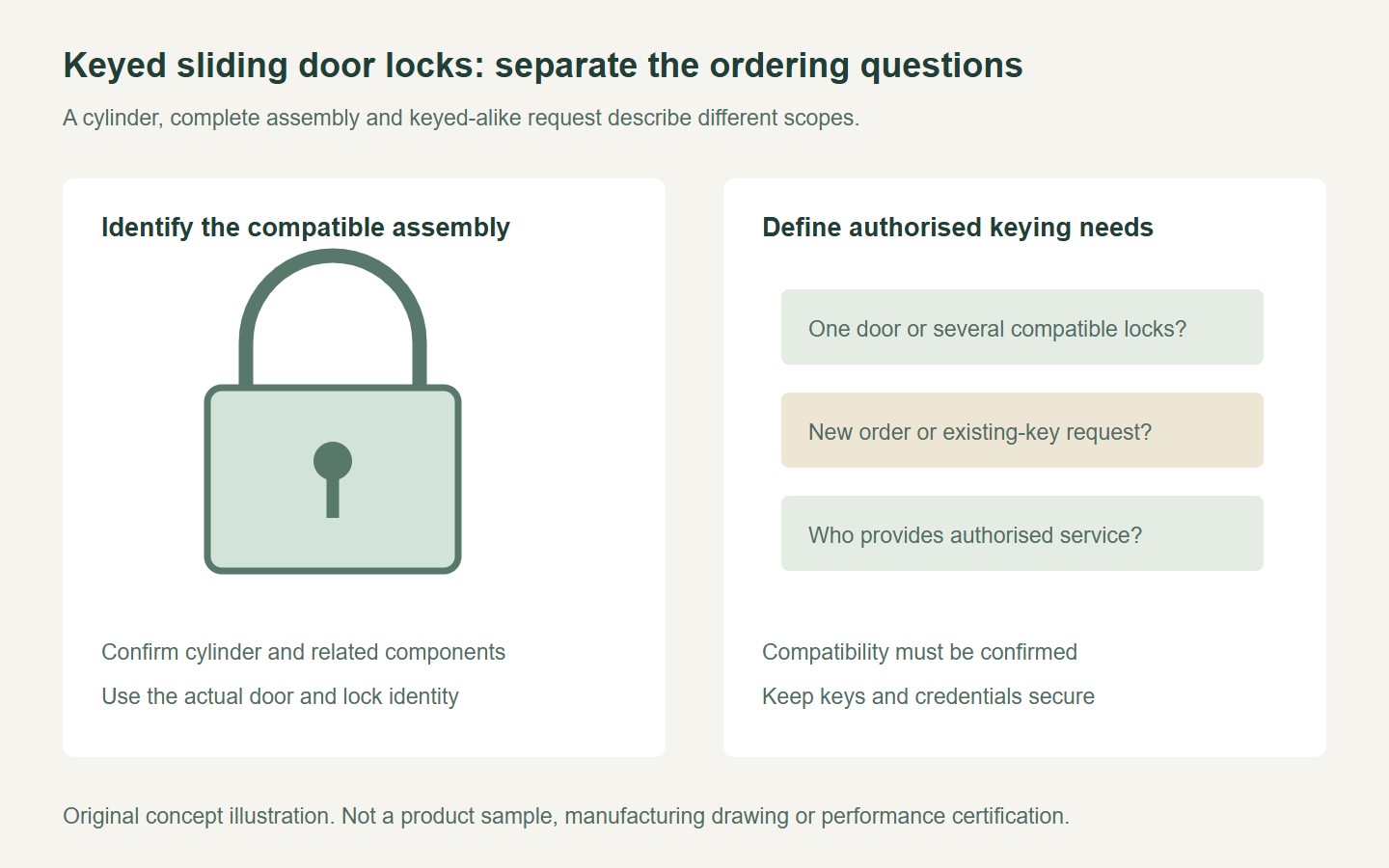
Agree the service scope and verify normal operation
Request a written scope identifying the compatible accessory, required preparation, labour and any related repair. Clarify what the provider will do if the site assessment finds a different existing configuration.
After installation, ask for a demonstration of the agreed authorised use and check that the door moves and latches through the permitted sequence. Store the component references and care instructions with the original door record.
- Identify the door, handles and lock.
- Confirm a supported exterior-key option.
- Approve the required preparation and provider.
- Check handing and use from both sides.
- Retain the installed parts and service record.
For a Forge-supplied door, provide the original order and retrofit request to Forge. The sliding door catalogue does not establish universal accessory compatibility. A successful retrofit starts with a documented suitable option for the existing assembly.
Questions buyers ask
Can I add an exterior key lock to any sliding glass door?
No universal compatibility should be assumed. Identify the actual door and existing hardware, then ask for a supported accessory or professionally reviewed alternative. Confirm the required preparation and responsible service provider before purchasing or altering parts.
Does the handle style affect which exterior lock fits?
It can. Manufacturers may specify particular compatible combinations and restrictions. Use the exact door and handle references rather than choosing a keyed accessory solely by appearance, finish or a general sliding-patio-door label.
Can I drill the glass to fit a new keyed lock?
Do not treat that as a retrofit option for tempered glass. Its holes and other fabrication must be resolved before heat treatment. Ask the glass processor and door supplier to review the actual construction and supported hardware route before any alteration.
Prepared for Forge Windows and Doors (FoShan) Co., Ltd. Sources checked . Catalogue photographs and planning illustrations do not establish the performance of a supplied product.


