
Types of sliding glass doors are easiest to understand through three questions: which panels move, where they park and how the operating mechanism works. Inline, multi-slide, pocketing and lift-and-slide describe different aspects of a system, so some of these terms can apply to the same door.
For homeowners choosing an opening, this layered comparison is more useful than treating every label as a separate mutually exclusive product. First select the movement and space requirements, then confirm the specific assembly for the intended use.
Selection sequence: define panel layout, parking and operation, then review the complete product's required function and evidence.
Start with the panel layout
Identify the fixed and operating panels in the proposed assembly. A familiar two-panel patio layout may have one operating leaf, while a multi-slide arrangement has several moving panels.
Marvin describes several sliding-door categories and operating arrangements. The useful next step is the actual configuration drawing rather than assuming a panel count determines the whole mechanism.
Ask which direction each leaf travels and whether the normal opening uses one panel or a group. Include the everyday passage and the fully open position in the review.
Keep glazing pane count separate. Double glazing describes glass layers inside the unit; it does not state how many door leaves move or where those leaves park.
Compare stacking with pocket parking
In a stacking arrangement, panels remain grouped visibly in or beside the frame. Pocketing moves the panels into a planned wall space, which introduces different construction and service-access requirements.
Andersen MultiGlide documentation includes both stacking and pocketing options. These show that parking can be a configuration choice within a product family rather than a separate material type.
| Term | What it mainly describes |
|---|---|
| Inline or conventional slider | Panel travel within parallel frame paths |
| Multi-slide | Several operating panels within an identified system |
| Pocketing | Where panels are concealed when parked |
| Lift-and-slide | A particular operating mechanism, with its own instructions |
Request the actual clear passage and parking dimensions. Avoid assigning a universal opening percentage to any of these broad terms.
Treat lift-and-slide as an operating system
Lift-and-slide identifies a mechanism in which the product's handle and hardware provide the specified change between movement and the closed position. The actual operation must follow the manufacturer's instructions.
Marvin provides separate Ultimate Lift and Slide technical documents for stacked and pocket arrangements. That illustrates why the operating mechanism and parking configuration are separate parts of the specification.
Ask for a demonstration of the selected system and confirm that the users can operate it comfortably in the proposed layout. Do not apply instructions from a conventional slider or another manufacturer's product.
Keep frame, glazing, hardware and size limits linked to the same documented assembly. A mechanism name does not by itself establish structural, weather or thermal performance.
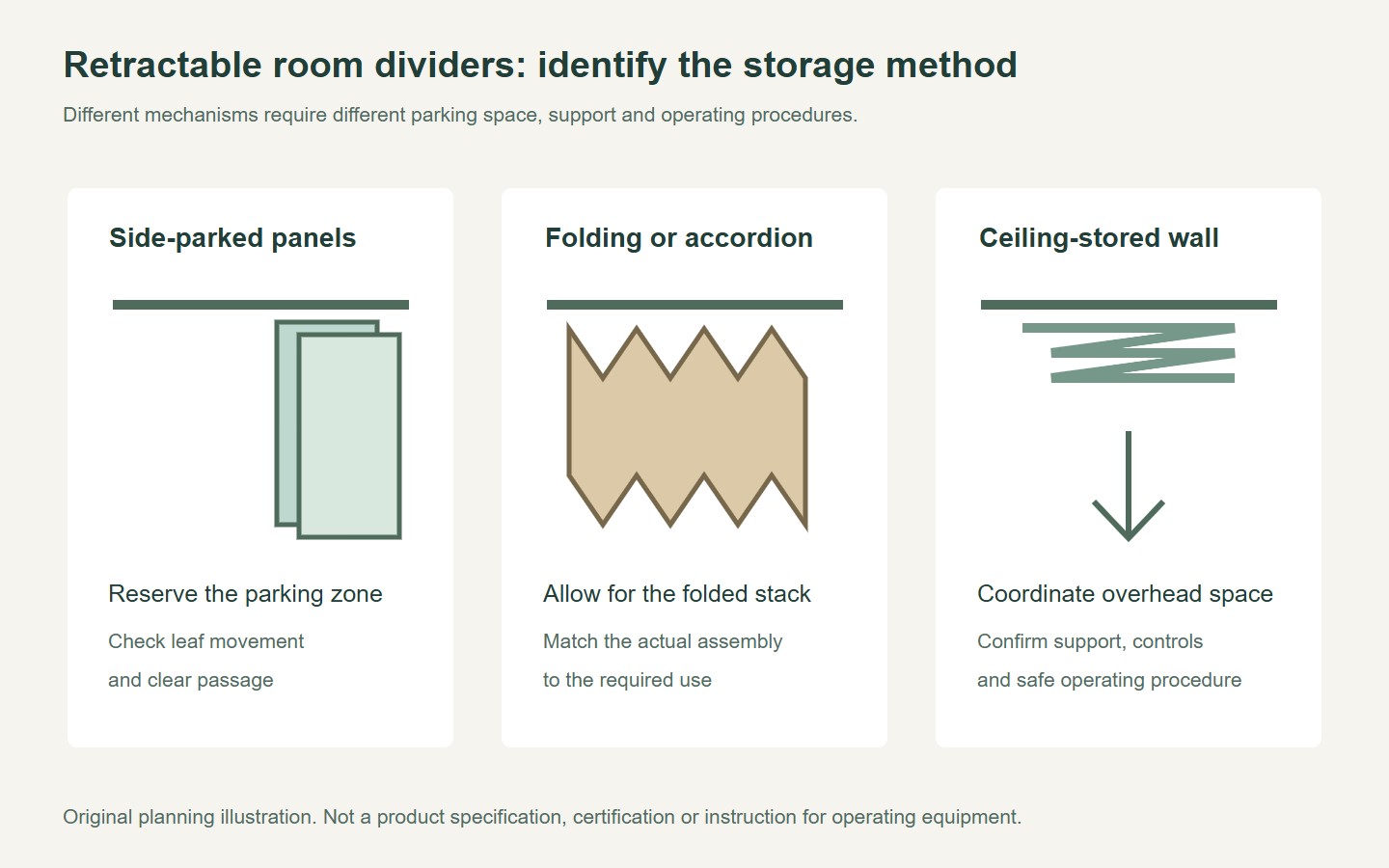
Compare the intended interior or exterior role
An interior visual divider and an exterior patio entrance need different functions. State the application before comparing materials, frames and operating options.
For exterior use, request the relevant performance information and coordinate the sill with the surrounding construction. For an interior boundary, define visual and acoustic expectations and any special requirements separately.
Related folding glass doors use hinged panel groups that gather as they move. They may suit a different parking plan, but should be compared through the actual clear route and closed function rather than assumed to be the same type of slider.
Similarly, a retractable insect screen is a separate component. Show its path and cassette with the glass-door layout so that the selected parts work together in daily use.
Choose an actual configuration rather than a label
Prepare a drawing with the opening, panel positions, furniture and approach routes. Ask the supplier to respond with the exact proposed product and the clear passage in the relevant operating states.
Confirm glass make-up, frame construction, finish, handles, screen and installation scope. Compare evidence that applies to the offered arrangement rather than a best-case result elsewhere in the range.
- Identify fixed and operating panels.
- Choose a feasible parking arrangement.
- Review the actual operating mechanism.
- Define the interior or exterior function.
- Approve the complete assembly and service access.
Use the Forge sliding door catalogue and send the intended panel movement for review. The right type is the documented configuration that meets the opening's practical needs, with every descriptive term tied to an actual part of the system.
Questions buyers ask
Are pocketing and lift-and-slide mutually exclusive types?
No. Pocketing describes where panels park, while lift-and-slide describes an operating mechanism. Some identified systems offer different parking arrangements. Confirm the exact product and configuration rather than treating the terms as necessarily separate categories.
Does multi-slide mean every visible glass panel moves?
Not automatically. The actual configuration may contain fixed and operating panels. Ask for a labelled drawing showing every leaf, its travel and parking, together with the clear passage in the everyday and fully open positions.
Are folding glass doors the same as ordinary sliding doors?
They use a different movement: linked panels fold as they travel, while ordinary sliding panels remain parallel. Compare the selected layouts, parking and closed functions, and use the correct instructions and evidence for each actual system.
Prepared for Forge Windows and Doors (FoShan) Co., Ltd. Sources checked . Catalogue photographs and planning illustrations do not establish the performance of a supplied product.


