
Used sliding glass doors should be assessed through the actual item, its product identity and the completeness of the assembly before purchase. A photograph of one panel or a statement that the door worked before removal does not establish a ready-to-install system. Confirm condition, fit and the work required for the new opening.
For buyers considering a second-hand unit, the useful comparison is its complete installed scope, including any missing parts or supported repairs. A low asking price should not replace a product and site assessment.
Before paying: identify what is included, inspect the actual assembly appropriately and obtain the sale, collection and return terms in writing.
Check photographs and the actual item description
Ask for clear views of the complete unit, both faces, accessible labels and the relevant hardware. Distinguish photographs of the item for sale from generic catalogue images.
The Federal Trade Commission marketplace guidance recommends checking actual-item photographs, descriptions and seller terms. Apply that approach to the door rather than relying only on a condition label such as used or refurbished.
Clarify whether the offer includes an outer frame, all fixed and operating panels, handles, locks, guides, seals, screen and other original components. A glass panel alone is not a complete patio-door assembly.
Keep the seller's answers and component list with the listing record. Resolve contradictions before arranging purchase or collection.
Identify the original product and supported parts
Record the manufacturer, series and relevant labels where available. Andersen provides a product-identification worksheet for its gliding patio doors; use the appropriate route for the actual brand.
Confirm the availability of any required replacement parts with a suitable provider. Similar-looking hardware or panels from another system should not be assumed interchangeable.
| Pre-purchase question | Evidence to obtain |
|---|---|
| What product is it? | Actual labels, order information or manufacturer identification |
| Is the assembly complete? | Itemised parts and actual-item photographs |
| What needs work? | Appropriate condition assessment and supported repair scope |
| Will it fit? | Confirmed product dimensions and new-opening requirements |
Do not use the glass date alone as proof of the whole door's installation history or current condition.
Have condition and suitability assessed before reuse
Review the visible frame, glazing, seals and operating components through an appropriate inspection. If glass is cracked, loose or unstable, avoid operating or handling the assembly as a casual test.
Ask the responsible installer to assess whether the unit is suitable for the intended new location and requirements. The original installation may have used a different sill, exposure or supporting arrangement.
Andersen publishes product-specific panel and service instructions, illustrating why a supported repair depends on the identified construction. Do not assume every incomplete used assembly can be restored with generic spare parts.
Keep relevant glazing and performance evidence with the unit if it is required for the project. A seller's description should not be treated as a new certification for the reused opening.
Compare the complete cost and collection scope
Include missing components, assessment, transport, preparation, installation and making good in the comparison. A second-hand product price and a complete new installed offer cover different work unless their scope is aligned.
Agree who is responsible for removal, loading and transport and use a suitable qualified handling arrangement for the actual size and condition. Do not assume the buyer can safely carry a large glazed unit because it is described as easy to collect.
Confirm the seller and marketplace rules about returns, refunds and damage and retain the written terms. Do not assume every used-item transaction has the same protections or conditions.
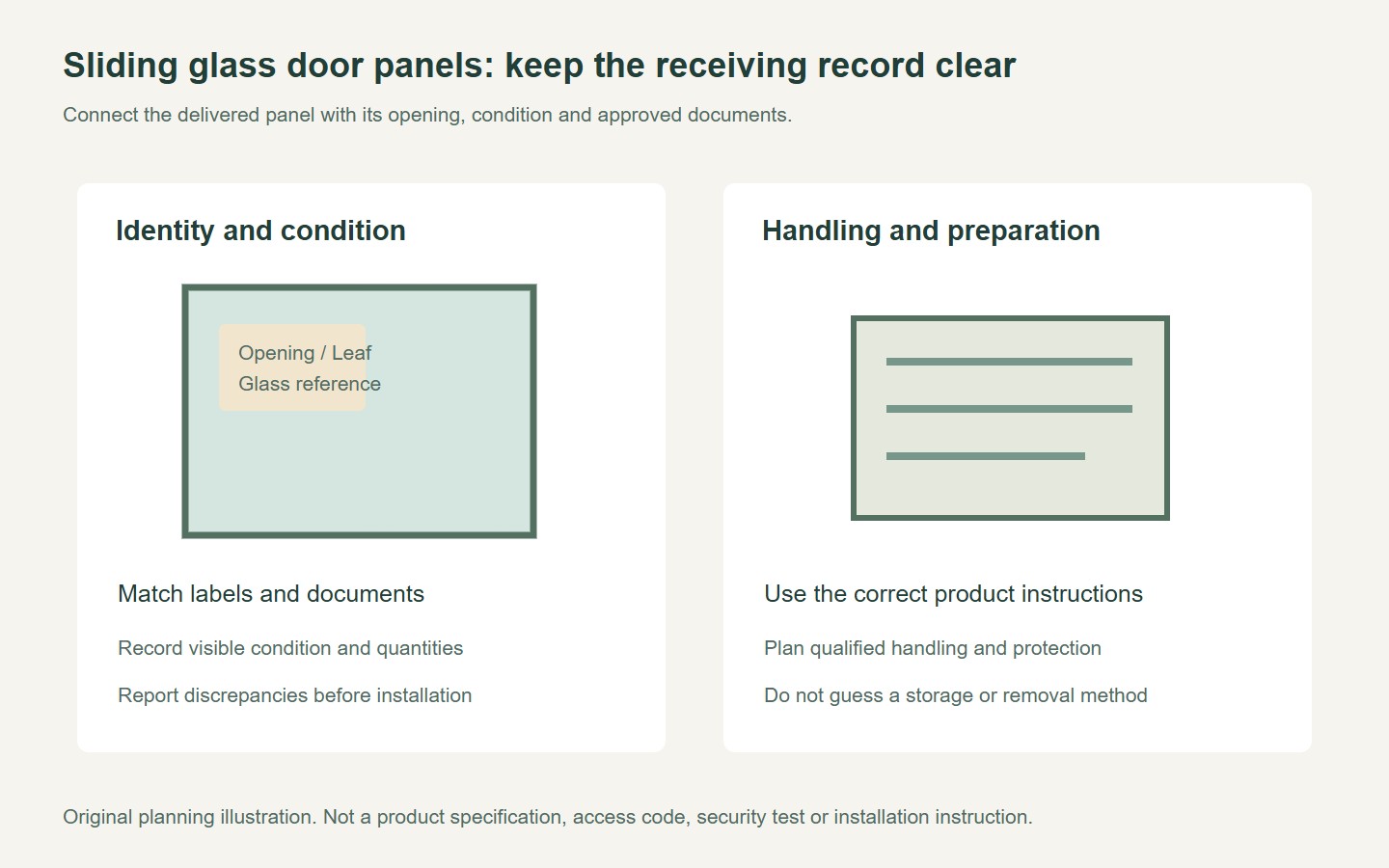
Keep a reuse record for the final installation
If the assembly is accepted for the project, retain the original product information, condition record, supplied parts and any approved replacement components.
Have the installer document the final configuration and provide the relevant operating and care instructions. Future service should be able to identify what was actually reused and what was changed.
- Verify the actual item and complete sale scope.
- Identify the manufacturer and supported parts.
- Assess condition and suitability for the new opening.
- Compare full costs and collection responsibilities.
- Retain the final reused-assembly record.
For a new-product comparison, view the Forge sliding door catalogue and request a proposal for the actual opening. No used inventory is claimed here. The decision should compare complete, suitable solutions with clear evidence and responsibilities.
Questions buyers ask
Is a used glass panel the same as a complete sliding door?
No. Confirm whether the outer frame, all panels, hardware, seals, guides, screen and other required components are included. A panel-only offer may require a different compatible assembly and should not be treated as a ready-to-install unit.
Can a door that worked before removal be assumed suitable for my opening?
No. Have the actual condition, dimensions, supporting requirements and intended new application assessed. Removal, storage and missing components can also affect the reuse scope, so retain evidence rather than relying only on the seller's statement.
What should I compare with the asking price?
Include assessment, compatible missing parts or repairs, collection, transport, opening preparation, installation and making good. Confirm the written sale and damage terms so the used offer can be compared against a complete alternative on the same basis.
Prepared for Forge Windows and Doors (FoShan) Co., Ltd. Sources checked . Catalogue photographs and planning illustrations do not establish the performance of a supplied product.


