
The best sliding doors are the ones that meet the opening's purpose, fit the available space and have evidence for the performance you need. A patio entrance, closet and interior divider should not be ranked through one universal product list. Start with the application, then compare suitable complete systems.
This guide helps owners build a shortlist without treating manufacturer claims or attractive photographs as hands-on test results. It offers a decision method, not an independently tested ranking of brands.
Shortlist rule: first eliminate systems that cannot meet the essential use and fit requirements; compare appearance, options and price among the remaining suitable choices.
Choose the right category before a favourite product
State whether the opening is exterior, an interior passage or access to storage. That decision changes the functions and evidence required before finish or style is considered.
For an interior opening, compare surface-mounted, pocket and other suitable arrangements against the available wall and passage. For a closet, examine access to the contents. For an exterior door, add the relevant building-envelope requirements.
Andersen MultiGlide illustrates stacking and pocketing exterior configurations, while Johnson pocket-frame documentation describes a particular interior hardware system. These are different product categories, not competitors in a single performance ranking.
| Application | First decision |
|---|---|
| Exterior passage | Appropriate assembly for exposure and building requirements |
| Interior connection | Movement, parking and boundary function |
| Closet | Useful access to the planned storage |
Define the non-negotiable requirements
List the functions the door must provide. These may include a particular usable passage, a privacy need, a compatible threshold or a documented performance requirement.
Separate those essentials from preferences such as a narrower visible frame or a particular handle finish. A system that looks ideal but cannot meet the essential brief should not win the comparison through a lower price.
Ask each supplier to respond to the same requirements and identify anything that remains subject to design review. A clear statement that an option is unsuitable is more useful than a vague promise that it can probably work.
For special fire, security, acoustic or other duties, require the appropriate product and evidence. Do not infer these functions from glass thickness, a heavy appearance or the presence of a lock.
Compare fit in the open and closed positions
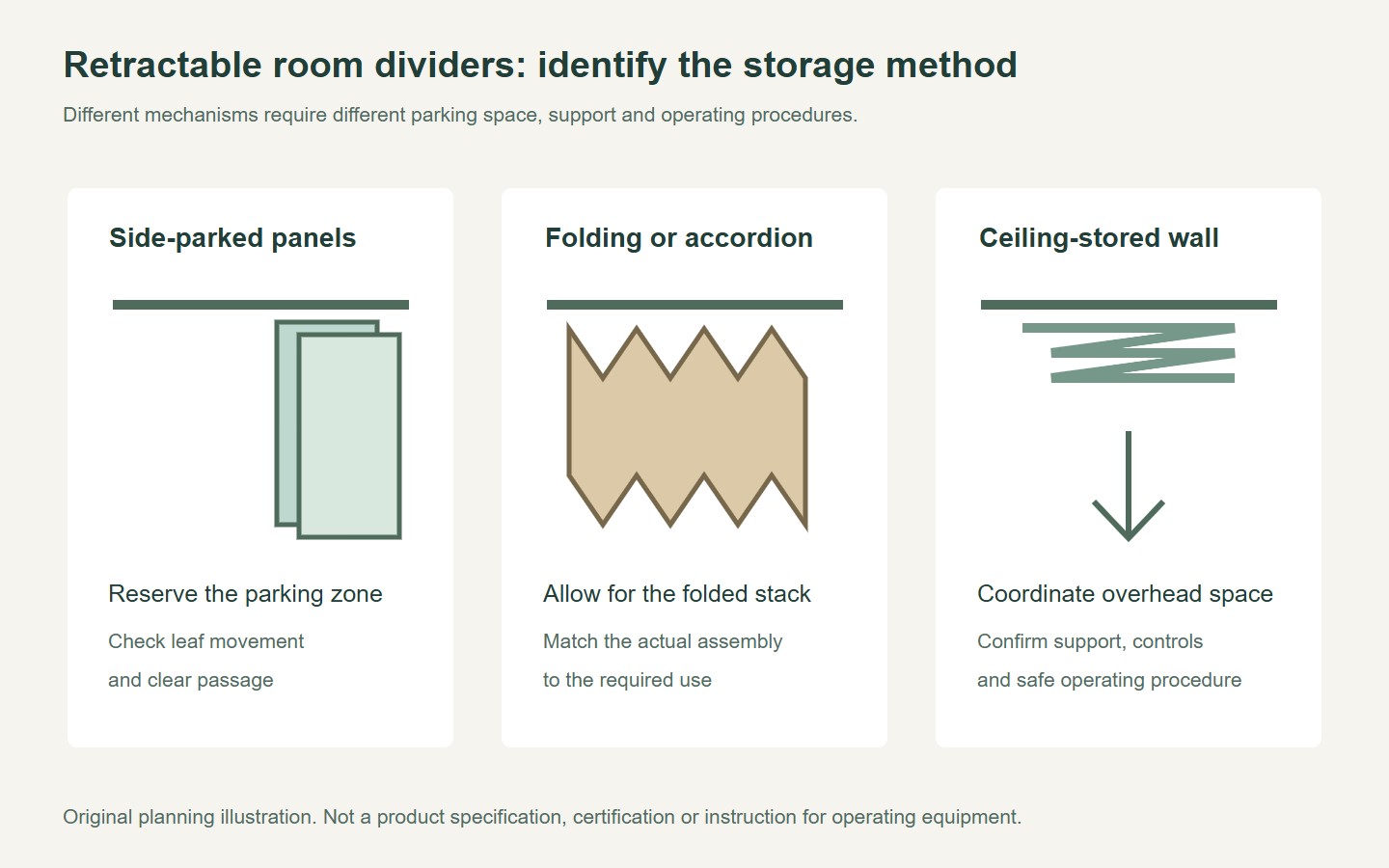
Request a dimensioned layout of the actual proposed configuration. It should identify the overall opening, clear passage, moving panels and parking area.
Review the common partially open position as well as the fully open view. Include handles, screens, furniture and storage movements that affect everyday use.
If you are considering an accessible route, the U.S. Access Board guidance shows why width, approach, thresholds and operation need coordinated review. Establish the requirements applicable to your own project and assess the complete installed arrangement.
Ask for evidence that matches the quotation
Check whether any performance document describes the same frame, glazing, sill and arrangement being offered. A result for another product or a different option should not silently become evidence for the final order.
Keep the assessment scope clear. A glass-only thermal value differs from a whole-product rating, and a component test does not automatically prove the complete door's security or acoustic result.
The U.S. Department of Energy explains distinct fenestration measures such as U-factor, SHGC and visible transmittance. Use comparable definitions and units when evaluating an exterior proposal, while keeping the project's actual requirements in view.
Where no relevant evidence is available, mark that requirement unresolved. Do not replace it with an estimated score that looks like a laboratory result or a guarantee of future comfort.
Make the final choice on complete scope and support
Compare leaf construction, finish, hardware, delivery, installation and making good on the same basis. Confirm which options are included and who takes responsibility for measuring and final fit.
Ask how the door will be cleaned and serviced, and which components can be supported after installation. A visually minimal design should still leave a practical route for maintenance.
- Select the appropriate product category.
- Define essential functions and fit.
- Review actual open and closed layouts.
- Match evidence to the offered configuration.
- Compare installed scope and aftercare.
Use the Forge sliding door catalogue as one source of product options and submit the same project brief for a configuration review. The best sliding doors for that project will be the suitable, documented choice that works in daily use, not a universal winner for every building.
Questions buyers ask
Which sliding door type is best for every room?
There is no single type that suits every room. Exterior entrances, interior connections and closets have different needs. Define the purpose, available parking, clear passage and required performance, then compare complete systems that meet those conditions.
Should I choose the door with the highest advertised rating?
First confirm what the rating measures and which configuration it covers. A result for another size, sill, glazing or component may not describe the proposed assembly. Compare relevant evidence against the actual project requirement rather than ranking unrelated numbers.
Is the cheapest suitable door automatically the best value?
Compare the complete supply, installation and aftercare scope before deciding. Check exclusions, included hardware, delivery and future service. A low product-only price may leave essential work unpriced, while a more complete offer may cover responsibilities the other quotation omits.
Prepared for Forge Windows and Doors (FoShan) Co., Ltd. Sources checked . Catalogue photographs and planning illustrations do not establish the performance of a supplied product.


