
Sliding track doors should be identified before a track, roller or hanger is replaced. A top-supported leaf and a bottom-rolling patio door may use different load paths and components. Similar-looking rails do not establish that parts are interchangeable.
If an existing door is difficult to move, record the symptom and inspect only what is safely visible. A qualified supplier or repairer can then determine whether cleaning, adjustment, a component replacement or a wider repair is appropriate.
First step: identify the original system, photograph the visible track and describe when the problem occurs. Use the care and repair guidance for that assembly rather than a generic dismantling method.
Identify how the leaf is supported and guided
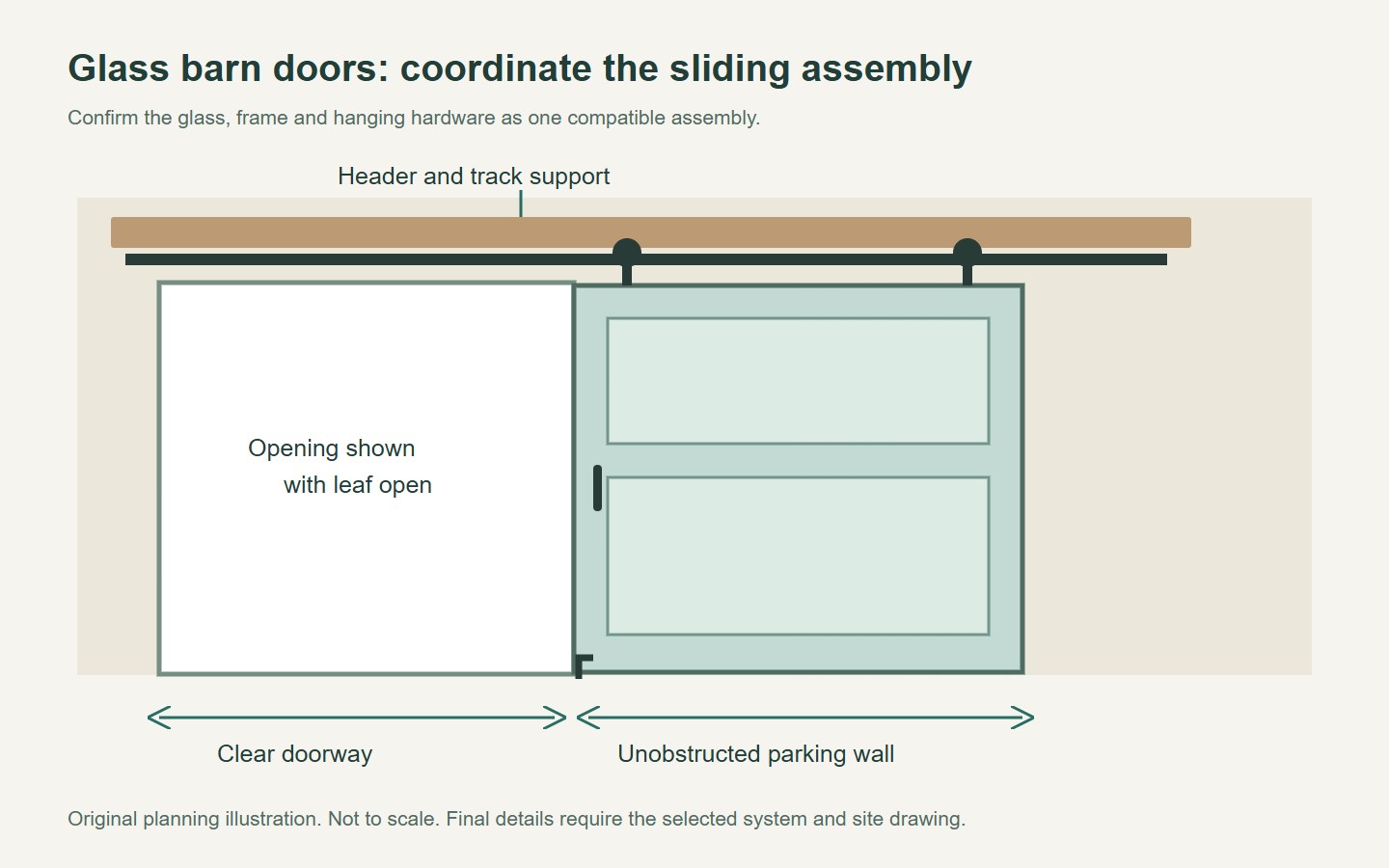
Ask whether the main carrying hardware is above or below the leaf, and identify any separate guide or restraint. The visible bottom component may guide a hanging door rather than carry its weight. A cover may conceal the working part of a top track.
Record the manufacturer, product series and accessible labels where available. Photograph the whole doorway and visible details without removing a heavy panel simply to search for a mark.
Johnson Hardware separates pocket, wall-mount, bypass and other operating families. That classification illustrates why track identification should come before selecting a replacement part.
| Observation | Information to collect |
|---|---|
| Top-supported arrangement | Visible rail, hanger or cover and any lower guide |
| Bottom-rolling arrangement | Visible sill track and accessible component identification |
| Multiple tracks | Leaf positions, overlap and track arrangement |
| Uncertain construction | Whole-opening photos and original paperwork if available |
Describe the operating symptom precisely
Note whether resistance occurs at one point, throughout the travel or near the closing position. Record visible debris, damage or a recent change in the room. These are observations to help diagnosis, not proof of a particular failed component.
Also note whether the leaf meets its latch correctly and whether the issue affects one or several panels. Do not force a damaged or unstable door to produce a demonstration.
A dragging leaf can have more than one cause. Replacing a roller without reviewing the track, frame and other interfaces may leave the underlying problem unresolved. Ask the responsible repairer to establish the scope.
Keep fingers and objects away from moving or retaining components during ordinary observation. Any investigation requiring panel removal should follow the identified system's procedure and suitable handling arrangements.
Use the right care information for sliding track doors
For routine care, locate the manufacturer's instructions for the specific product and finish. They may distinguish cleaning of the track, glass, weather seals and operating hardware.
Andersen provides care guides organised by product and task. Its separate guidance is an example of why a maintenance recommendation should be connected to an identified assembly.
The Andersen product-care document also gives its own cleaning and lubrication recommendations. Those recommendations should not be transferred automatically to an unrelated track or fitting.
Do not apply an unspecified oil, solvent or abrasive treatment as a universal remedy. Ask which method is appropriate for the actual material and mechanism, especially if the product identity is uncertain.
Match replacement components to the original system
A replacement enquiry should identify the component and the parts it interacts with. Track profile, wheel or hanger interface, mounting details and the leaf's finished specification may all matter.
Use an original part reference where it can be established, or obtain written compatibility confirmation from the responsible supplier. Do not order solely from a similar profile photograph or overall rail length.
Keep guidance, stops, retention features and any weather-management details within the repair scope. Removing a component to gain movement or covering a drainage route can create another problem.
If the original system is obsolete or damaged more widely, ask the repairer to explain the alternatives and their scope. A partial repair and a complete replacement should be compared as different proposals.
Send a useful service enquiry
Put the observations and records into one concise request. Include the opening reference, product identification, photographs and description of the problem. State which measurements are preliminary and which details remain unknown.
- Identify the track family and original product where possible.
- Record where and when the operating problem occurs.
- Use the appropriate care instructions for routine tasks.
- Have compatibility and repair scope confirmed.
- Retain the final part and service records.
For a Forge-supplied system, contact Forge with the original order information so the enquiry can be tied to the supplied configuration. The current sliding door catalogue can help describe a product family, but it cannot identify an older track by itself.
Sliding track doors are more straightforward to maintain when the system is known. Identification and a clear symptom record are better starting points than trial-and-error parts or generic lubrication advice.
Questions buyers ask
Can two tracks with the same length use the same rollers?
Not necessarily. Profiles, interfaces and system requirements may differ. Obtain the original part reference or a compatibility confirmation before ordering replacements.
Does a stiff sliding door always need new rollers?
No. Record the symptom and have the assembly assessed. Cleaning, adjustment, track condition or another issue may be involved, so the repair scope should be established before parts are selected.
Should I remove the door to identify its track?
Do not dismantle a heavy or unfamiliar assembly using a generic method. Start with accessible identification and photographs, then have any necessary removal performed using the correct procedure and handling arrangements.
Prepared for Forge Windows and Doors (FoShan) Co., Ltd. Sources checked . Catalogue photographs and planning illustrations do not establish the performance of a supplied product.


