
Sliding door locks with key should be specified through the correct door assembly and the keying arrangement you need. A compatible cylinder, a complete exterior lock and a matching key for another door are different requirements. Identify them separately before ordering parts.
For owners managing several entrances or replacing an existing keyed component, the first step is the actual door and lock identity. A similar finish or key shape does not establish compatibility, and a key-operated cylinder does not alone determine the security or release function of the complete opening.
Order brief: record the door model, required lock scope, authorised keying needs and the applicable operation from each side.
Identify whether you need a cylinder or a complete assembly
A cylinder is one component of a keyed lock. The surrounding housing, handles, receiver and locking mechanism may also form part of the system that must match the door.
Provide the manufacturer, product reference and accessible photographs to the supplier. Ask which replacement parts are supported and whether the proposed scope retains or changes the existing locking arrangement.
Andersen identifies a particular exterior keyed lock for its 100 Series gliding patio door and lists a handle-set incompatibility. That is a useful example of why an apparently suitable keyed part still needs application checking.
Do not treat that example as a recommendation for another door. Confirm the exact model, finish and any relevant handing or interface details before the supplier selects the final part.
Define keyed-alike requirements in plain language
If you want one authorised key to operate several doors, say which doors and existing locks are involved. The supplier or qualified locksmith can then assess whether a suitable arrangement is available.
Andersen explains that keyed-alike options depend on compatible lock cylinders and product combinations. Its guidance distinguishes factory ordering from work that may require a local locksmith. A shared brand name does not make every existing keying combination available.
| Your request | What to confirm |
|---|---|
| One replacement keyed component | Exact supported part and included keys |
| Several new locks using one key | Available compatible keyed-alike order |
| Match an existing key | Authorised locksmith assessment of compatibility |
| Different user access levels | Suitable access design, not an assumed feature |
Keep the requested outcome in the written order without publishing key codes or other sensitive credentials in ordinary project records.
Confirm operation and required release
Ask how the door is used from inside and outside, including the actions needed to secure or release it. A keyed exterior feature should be reviewed with the whole opening and its intended occupants.
For any required access or escape function, have the appropriate professional review the actual arrangement. Do not assume that adding a cylinder is acceptable for every door simply because the part can be attached.
The U.S. Access Board guidance for doors and hardware shows that operation and approach are part of accessible doorway design. Determine the applicable project requirements rather than treating a keyed lock label as evidence of overall compliance.
Ask for a demonstration of normal authorised operation after installation. If the leaf or mechanism binds, arrange service instead of forcing the key or using it to pull the door into position.
Keep key control and service responsibilities clear
Agree who holds authorised keys and who may request a change to the keying arrangement. Store any sensitive references securely, separately from drawings and documents that circulate widely.
If keys are lost or control of the property changes, contact the relevant supplier or a qualified locksmith for the authorised service route. The appropriate response depends on the actual lock and access needs; a universal replacement or rekeying promise would be misleading.
Record the service provider and updated component identity after work. If several doors were intended to share a key, confirm the agreed arrangement during the normal handover demonstration.
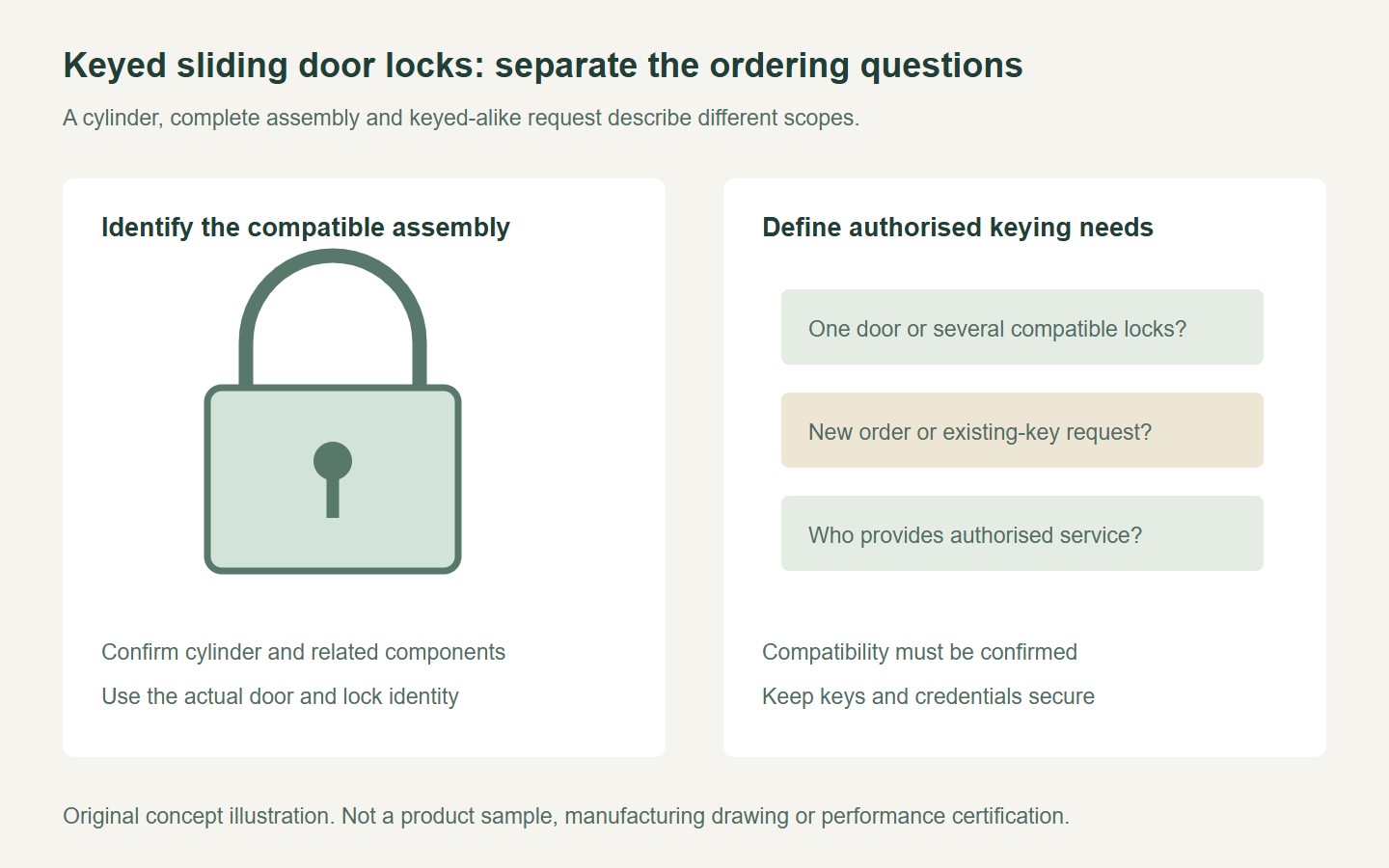
Order a documented, maintainable locking arrangement
Keep the final parts references, door identity and relevant care instructions together. Clarify the scope of the supplier's responsibility and any separate installation or locksmith work.
Ask whether the quoted finish and operating components match the intended environment. A decorative match should not override a compatibility restriction or the requirements of the complete door.
- Identify the door and existing lock.
- Define cylinder versus complete-assembly scope.
- State the authorised keying requirement.
- Confirm use, release and project suitability.
- Retain secure service and component records.
For a Forge order, send the original reference and required keyed function for review. The Forge sliding door catalogue does not establish compatibility with unrelated cylinders. Sliding door locks with key should be selected as documented parts of a complete, appropriate access arrangement.
Questions buyers ask
Can all my sliding doors use the same key?
Only if the actual locks support a compatible keying arrangement. Identify the doors and cylinders and ask the supplier or qualified locksmith to assess the request. A shared brand or similar appearance does not guarantee that existing keys can be matched.
Is a replacement cylinder the same as a replacement lock?
No. A cylinder is one component, while a complete lock may include its housing and other operating parts. Ask the supplier to specify the supported replacement scope for the actual door and identify which existing components will remain.
What should I do if a sliding door key becomes difficult to turn?
Arrange assessment by the relevant service provider or qualified locksmith and describe the symptoms. Do not force the key or use it to pull an ill-fitting door into position. Follow the care instructions for the actual locking assembly.
Prepared for Forge Windows and Doors (FoShan) Co., Ltd. Sources checked . Catalogue photographs and planning illustrations do not establish the performance of a supplied product.


